






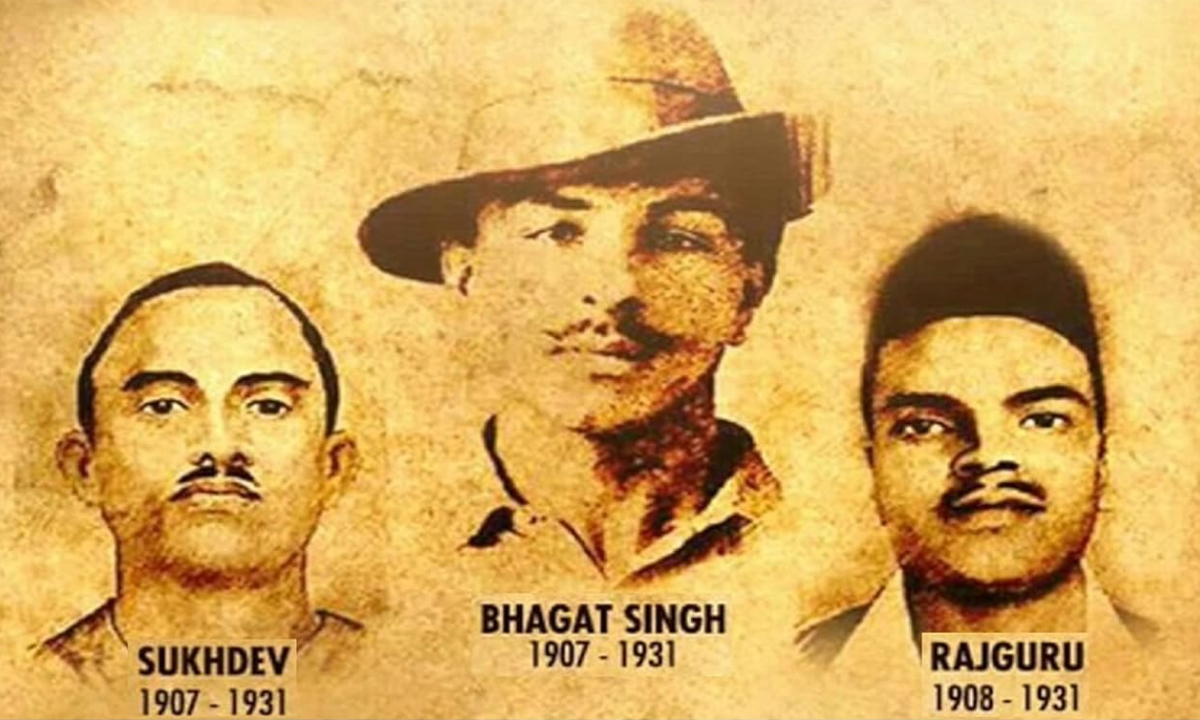
Bhagat Singh – A Freedom Fighter Few freedom fighters in India fought for the independence of their country with such deep passion as Bhagat Singh. Fearless patriotism, revolutionary ideology and valiant sacrifice turned Bhagat Singh into a symbol of anti-British resistance. His name is the embodiment of bravery, youth power and the spirit of revolution even in present days. Add to the list there are freedom fighters of exemplary dedication and selfless character who pursued nonviolent means but Bhagat Singh was of an opinion that only revolutionary movement could shake the masses against oppression.
From a family that was actively involved in the struggle for freedom of India, Bhagat Singh dedicated his life to the liberation effort. Bhagat Singh who could only live for 23 years, his thinking and actions have influenced forever the freedom movement of India – our youth.
Bhagat Singh Height, Weight, Age & Personal Details
| Field | Details |
| Full Name | Bhagat Singh |
| Popular Name | Shaheed Bhagat Singh |
| Date of Birth | 28 September 1907 |
| Birth Place | Banga, Lyallpur District, Punjab (British India) |
| Date of Death | 23 March 1931 |
| Age (at Death) | 23 Years |
| Bhagat Singh Height | 5 feet 6 inches (Approx. 168 cm) |
| Bhagat Singh Weight | Around 60 kg |
| Eye Colour | Dark Brown |
| Hair Colour | Black |
| Skin Colour | Wheatish |
| Nationality | Indian |
| Religion (by birth) | Sikhism |
| Ideology | Revolutionary Socialism |
| Political Organization | Hindustan Socialist Republican Association (HSRA) |
| Famous Slogan | Inquilab Zindabad |
| Known For | Indian Freedom Fighter, Revolutionary Leader |
| Martyrdom Place | Lahore Central Jail |
Early Life and Family Background
Bhagat Singh was born 28 September 1907 in a Sikh family in Banga village (then Jaranwala Tehsil) of Lyallpur district, Punjab (now in Pakistan). He was born in a Sikh family with deep roots in India’s freedom movement.
His father Kishan Singh, and uncles Ajit Singh and Swarn Singh were all active revolutionaries who had worked against British rule. Ajit Singh was one of the main leaders during the well known Pagri Sambhal Jatta Movement and Swarn Singh died early as he was imprisoned by British. Bhagat Singh was born into such an era, and the revolutionary atmosphere shaped his mind as a child.
Ever since he was a kid, he’s had so much love for his country. Tales of courage, sacrifice and defiance in the face of British oppression were commonplace both at home and in attitude.
Impact of Jallianwala Bagh Massacre
Jallianwala Bagh Massacre, 1919 One of the most defining inspirations of Bhagat Singh in his early years was Jallianwala Bagh massacre (1919). At the age of 12, Bhagat Singh went to Amritsar to see for himself the place where hundreds of unarmed Indians had been mercilessly gunned down by British troops.
The blood-soaked earth of Jallianwala Bagh rattled him. He is said to have taken the land soil and preserved it as a reminder of British barbarity. His resolve to struggle against the colonial tyranny was further fortified after that traumatic day, and he began harbouring revolution in his heart.
Education and Intellectual Development
Bhagat Singh was an intelligent child and had in him a keen sense of precocity. He attended Dayanand Anglo-Vedic (DAV) School, Lahore. He enrolled in the National College, Lahore, an institution set up for promoting nationalist education free from British influence.
At the National College, Bhagat Singh came into contact with many other revolutionaries including Sukhdev and Bhagwati Charan Vohra. He became an avid reader of books about socialism, Marxism, anarchism and revolutionary movements around the world.
He researched the leaders Karl Marx, Friedrich Engels and Vladimir Lenin, as well as of Mikhail Bakunin. Such mentalities have greatly influenced his politics. Bhagat Singh was a firm believer in the fact that without social and economic equality there cannot be any real freedom.
Also read this: Sreeleela Husband Name | Baba Siddique Biography | Diljit Dosanjh Biography
Revolutionary Ideology and Beliefs
Bhagat Singh wasn’t only a revolutionary of the gun, but also of thought. Without putting an end to exploitation, inequality, and injustice, he thought that political freedom meant nothing.
Unlike blind terror, Bhagat Singh advocated violent action with a cause. He believed that a revolution was not about bloodshed but about changing systems that oppress people. Well-known is his remark that it is the eternal right of man to make revolution.
He was also a staunch opponent of religious partitions and advocate for secularism. Although he was born into a Sikh family, following the violence in 1919, Bhagat Singh turned to atheism and came to believe that only human actions could change India’s future — instead of any higher power.
Joining Revolutionary Organizations
Bhagat Singh developed a passion for the freedom struggle at an early age and started to follow Mahatma Gandhi around India. He became a member of the Hindustan Republican Association (HRA), which grew to become the Hindustan Socialist Republican Association (HSRA).
The society was formed for its members to precipitate a violent uprising aimed at ending British rule. Bhagat Singh was associated with revolutionaries such as Sukhdev, Chandrashekhar Azad and Rajguru.
The HSRA was committed to directing symbolic acts as a way of waking up the masses, that would make them see through the game of British imperialism.

Protest Against Simon Commission
In 1928, the British Government set up a commission under Sir John Simon to report on the political situation in India. But the commission had no members from India, and its composition angered the Indian community.
There were mass protests across the country, where people began to chant “Simon Go Back.” One such protest was at Lahore, in which agitators were brutally beaten by the police and an elderly man named Lala Lajpat Rai seriously injured. Lala Lajpat Rai subsequently succumbed to his injuries.
Bhagat Singh and his fellows decided to take retaliation of his death.
Assassination of J.P. Saunders
The purpose of James Scott’s assassination by Bhagat Singh and his comrades was retribution for Lala Lajpat Rai’s killing. One incorrect target Man mistakenly shot by Rajguru was British police officer J.P.Saunders on 17 December 1928.
Bhagat Singh also flung a bomb at the place to facilitate their escape and escaped. The British government was shaken and Bhagat Singh came to be known as him a national hero.
Central Legislative Assembly Bombing
Bhagat Singh and Batukeshwar Dutt threw bombs in the Central Legislative Assembly of Delhi on 8 April 1929, which then was only officially used by the legislative members. The bombs were deliberately crafted so as not to kill anyone.
They were campaigning against the two bills (Pass-ports Act and Trade Disputes act) that curtailed civil rights. They did not attempt to flee after they threw the bombs. Instead, they raised slogans such as “Inquilab Zindabad” and “down with Imperialism”, and gladly courted arrest.
They wanted their voices to echo through courtrooms and the newspapers.
Arrest, Trial, and Hunger Strike
(Bhagat Singh was arrested and tried. While in prison, his political associates and he had been discriminated against as compared to the British prisoners.
In protest, Bhagat Singh announced his intention to fast until death unless India won the status of political prisoners. The hunger strike dragged on for weeks, attracting huge public attention. His comrade-in-arms Jatin Das died on a prolonged hunger strike, sparking even more popular outrage.
The trial was used by Bhagat Singh as a citadel to propagate revolutionary ideas. His speeches and essays won him millions of followers throughout India.
Execution and Martyrdom
Bhagat Singh, Sukhdev and Rajguru were hanged to death on charges of J.P. Saunders’ murder.
The British government, despite all-out national protestation against it, petitions and pleas for mercy included, refused to lessen the sentence. Bhagat Singh, Rajguru and Sukhdev were hanged on 23 March 1931 in Lahore Central Jail.
He was aged 23 on execution. His killing jolted the nation and made him a symbol of sacrifice and resistance.
Bhagat Singh- The Thinker and Writer
Bhagat Singh was a great writer and intellectual too. His essays, letters and diary entries manifest his profound understanding of politics, society and human freedom.
One of his best-known essays, “Why I Am an Atheist,” elaborated on his disillusionment with deen and the need for rationality and accountability. He went on to argue that courage, reason, and action mattered more than religious dogma in his pursuit of freedom.
Even now, scholars and students study his writings and discuss their meaning.
Bhagat Singh Ideology and “Why I Am an Atheist” – Explained
Bhagat Singh Ideology: A Revolutionary Thinker of India
Bhagat Singh was not only an Indian freedom fighter but also a revolutionary philosopher and socialist thinker. His ideology was based on reason, justice, equality, and responsibility. He believed that real freedom means more than political independence—it also requires social and economic equality.
Key Beliefs of Bhagat Singh’s Ideology
- End of British colonial rule
- Social and economic equality
- Rights of workers and farmers
- Rejection of exploitation and injustice
- Importance of rational thinking over blind faith
Bhagat Singh strongly believed that freedom without equality is incomplete.
Bhagat Singh and Revolutionary Socialism
Bhagat Singh followed revolutionary socialism. According to him:
- Capitalism creates inequality
- Power should not remain in the hands of a few
- Society must be based on fairness and justice
He believed socialism was essential for building a truly independent India.
Bhagat Singh’s View on Revolution
Bhagat Singh clearly stated that:
Revolution does not mean chaos or unnecessary violence.
For him, revolution meant:
- Changing unjust systems
- Awakening people against oppression
- Building a society based on equality
This is why many of his actions were symbolic, meant to send a message rather than cause harm.
Why Bhagat Singh Wrote “Why I Am an Atheist”
Bhagat Singh wrote the essay “Why I Am an Atheist” in 1930, while he was in jail.
Many people believed that he had become arrogant because of his bravery and popularity. To clarify his position, he wrote this essay to explain why he did not believe in God.
Why Bhagat Singh Was an Atheist
1. Faith Should Be Based on Reason
Bhagat Singh believed that belief in God should not come from fear of punishment or hope of reward. He felt that fear-based faith weakens human courage.
2. Human Responsibility Is More Important
According to Bhagat Singh:
- Humans create injustice
- Humans must fix injustice
Blaming God for suffering allows people to escape responsibility.
3. Questioning Suffering and Inequality
He questioned:
- Why do the poor suffer?
- Why do oppressors live comfortably?
He felt that these realities could not be explained by divine justice.
4. Atheism Was a Thoughtful Decision
Bhagat Singh’s atheism was not sudden. It was the result of:
- Deep reading
- Logical thinking
- Influence of socialist and revolutionary literature
He chose atheism calmly and consciously.
5. Courage Without Hope of Heaven
One of the strongest ideas in Why I Am an Atheist is that Bhagat Singh was ready to:
- Face death
- Without hope of heaven
- Without fear of hell
For him, truth and duty were greater than reward.
Did Bhagat Singh Oppose Religion?
No.
Bhagat Singh did not hate religion. He opposed:
- Blind faith
- Superstition
- Using religion to control people
He supported secularism and unity.
Importance of “Why I Am an Atheist” Today
Bhagat Singh’s essay remains relevant because it teaches:
- Rational thinking
- Courage to question
- Responsibility for social change
It encourages young people to think independently instead of following beliefs blindly.
Interesting Facts About Bhagat Singh
1. Bhagat Singh Became a Revolutionary at a Very Young Age
Bhagat Singh was deeply influenced by the Indian freedom struggle during his childhood. By the age of 12, he had already decided to dedicate his life to India’s independence.
2. He Visited Jallianwala Bagh as a Child
After the Jallianwala Bagh massacre (1919), young Bhagat Singh visited the site and collected soil soaked with blood. This incident shaped his revolutionary mindset permanently.
3. Bhagat Singh Was Highly Educated and Well-Read
Unlike the common belief that revolutionaries relied only on weapons, Bhagat Singh was an avid reader. He studied books on socialism, communism, philosophy, and politics, including works by Karl Marx and Lenin.
4. He Was a Strong Supporter of Socialism
Bhagat Singh believed that freedom without equality is meaningless. He wanted an India where workers and farmers had equal rights and dignity.
5. The Assembly Bomb Was Non-Lethal
The bombs thrown by Bhagat Singh and Batukeshwar Dutt in the Central Legislative Assembly were not meant to kill anyone. Their purpose was to make the British government hear the voice of Indians.
6. He Voluntarily Courted Arrest
After throwing the bombs, Bhagat Singh did not try to escape. He willingly surrendered so that he could use the courtroom as a platform to spread revolutionary ideas.
7. Bhagat Singh Led a Historic Hunger Strike
While in jail, Bhagat Singh led a hunger strike demanding equal rights for Indian political prisoners, which lasted for weeks and gained nationwide attention.
8. He Wrote “Why I Am an Atheist” in Jail
Bhagat Singh wrote his famous essay “Why I Am an Atheist” while imprisoned. It shows his belief in reason, logic, and human responsibility over blind faith.
9. He Faced Death Without Fear
Bhagat Singh embraced death with courage. He believed that dying for a cause was more honorable than living without purpose.
10. He Was Only 23 Years Old When Executed
Bhagat Singh was executed on 23 March 1931 at the age of just 23, making his sacrifice even more impactful and inspiring.
11. “Inquilab Zindabad” Became Immortal Because of Him
The slogan “Inquilab Zindabad” became popular nationwide due to Bhagat Singh and is still used as a symbol of resistance and revolution.
12. Bhagat Singh Is Remembered as “Shaheed-e-Azam”
He is widely honored as Shaheed-e-Azam Bhagat Singh, meaning The Greatest Martyr of India.
Why Bhagat Singh Is Still Relevant Today
Bhagat Singh continues to inspire youth to:
- Think independently
- Question injustice
- Stand against oppression
- Work for equality and truth
Legacy and Influence
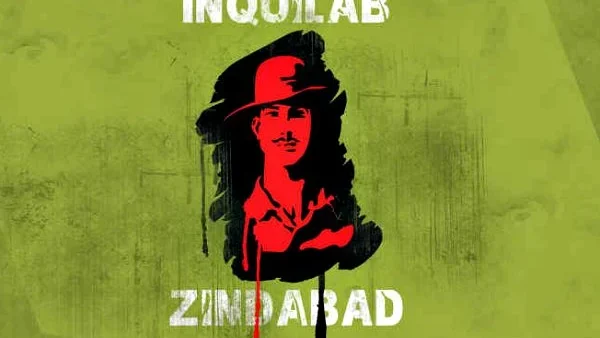
The legacy of Bhagat Singh transcends his revolutionary act. He was turned into a symbol of youthful power, fearlessness and self sacrifice.
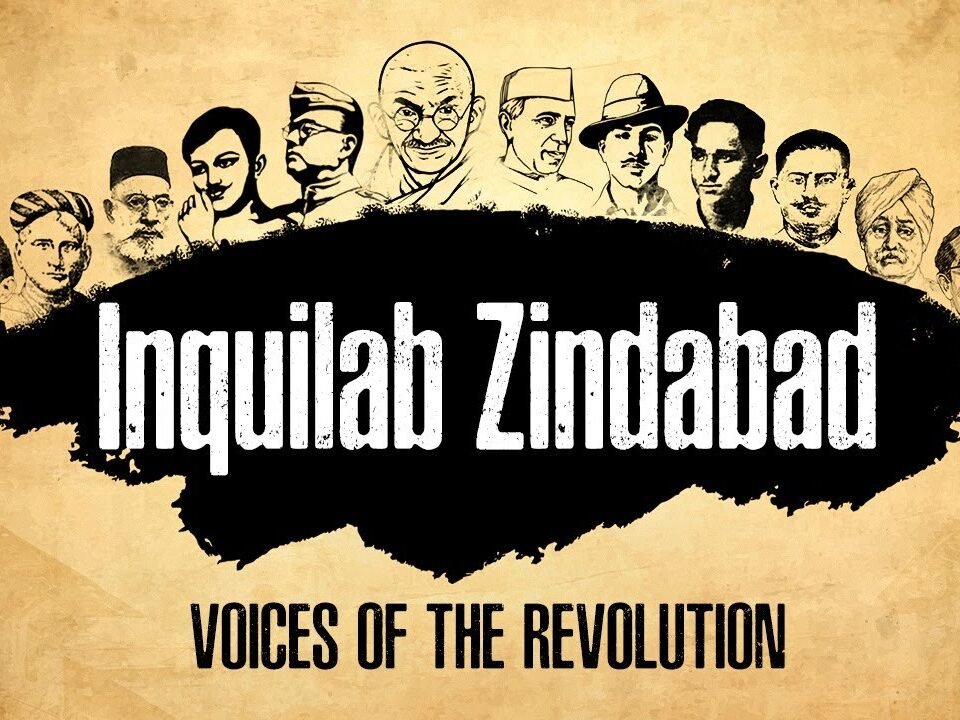
He was an inspiration to untold numbers of freedom fighters, poets, writers and activists. Even those who had chosen non–violent routes to leadership held him in esteem for his courage and devotion. His catchphrases, like “Inquilab Zindabad,” or “Long Live the Revolution!” retained their potency as symbols of defiance.
Today, Bhagat Singh is memorialized with statues, books and films in India. Shaheed Diwas is celebrated annually on Mar 23 to commemorate his sacrifice.
Relevance of Bhagat Singh in contemporary India.
The ideas of Bhagat Singh still hold relevance in today’s India. His ideals of social justice, equality and freedom from oppression continue to inspire those who struggle against corruption, discrimination and oppression.
He insisted that independence was real only when it empowered the poor, the worker and the peasant. His views inspire the youth to revolt against injustice and take an active role in nation-building.
Also read this: Diljit Dosanjh Biography | Sunny Deol Biography | Varun Dhawan Biography